
You might think the most important character in your story is your protagonist. After all, the story is centered around them, right?
Well, you’re not wrong. But there’s certainly more to it.
The story is centered around your protagonist’s journey. Not just a literal journey, but an emotional one, too. And this emotional journey in particular is only possible because of antagonists and villains who threaten everything your reader stands for. Villains who push your readers to grow into themselves over the course of the story.
The key to a good story is a good villain (ha! oxymoron) that pushing your protagonist through their development.
If you want a good story, you need a great villain. If you want your readers to root for your protagonist, they need to hate your villain – even if they also sympathize with them.
So, how do you write a villain your readers will truly hate?
Save the Cat, Kill the Dog?
One of the most common techniques to create a relatable protagonist is called Save the Cat.
The principle works like this: if you have your protagonist do something truly noble and kindhearted – like saving a cat in a tree – readers will begin to root for them. This helps build a relationship between your readers and your main character, one that will survive all the mistakes and questionable decisions your protagonist makes as they go through their character arc.
If you want your reader to love a character, have them save a cat.
But what if you don’t want your audience to love a character? What if you want them to despise their very being? Cheer for their downfall?
Well, then you have the villain kill a dog.
Disclaimer: no real dogs are harmed in the writing of this technique.
Perhaps the most famous example of this is Cruella De Vil, whose one true mission in life is to kill Dalmatians to make a fur coat. It’s hard to root for someone who’s dead-set on doing something so needlessly cruel.
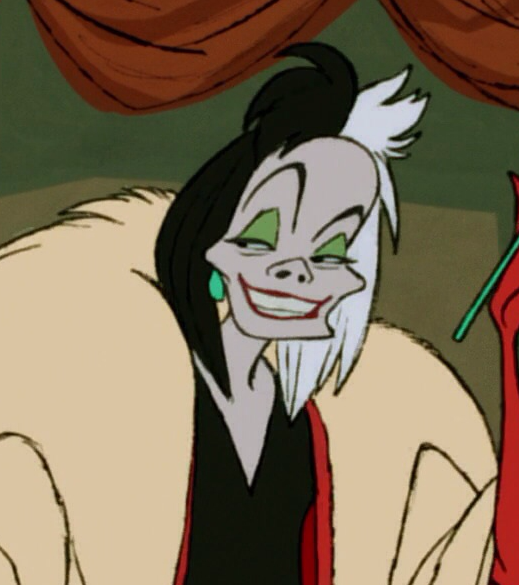
But your villain doesn’t have to literally kill dogs to be evil.
Kill the Dog just means having your villain do something so objectively cruel that your reader will firmly ally themselves against them. This can come in varying degrees of severity, but the idea remains the same.
Killing the dog is a great way to make your characters fear or hate a villain, generating tension early on in the story and keeping your readers hooked.
Plus, this technique leaves room for the villain’s character arc – an inexplicably evil action that takes place early on can be explained or developed later if you want to go down the sympathetic villain route. Or, you can keep them evil as can be – it’s up to you!
Sympathetic villain
A villain that readers are led to sympathize with over the course of the story, usually through a backstory that explains the “evil” actions they take.
What’s so Great About Killing the Dog?
Again, please don’t kill any real dogs. I will cry, and it’ll be all your fault.
BUT in a purely fictional sense…
Killing the dog gives you a chance to set up the main conflict of your story from the very beginning.
It keeps readers, well, reading; killing the dog can raise the stakes, which makes readers want to carry on to find out what will happen. Plus, readers might be curious why, exactly, the villain killed the dog the way they did, which will have a similar effect.
That’s why it’s so important to kill the dog early on, and then you can continue raising the stakes over the course of the story if you want, or develop sympathy through backstory. It’s also a great way to set up for a major plot twist – I’m talking a villain-is-the-real-hero situation. Getting your audience emotionally invested early on will make such a twist hit hard – or will make them hate the villain right through to the end, if that’s what you want.
Ways to Kill the Dog
So, you want to have your villain kill the dog. You want your readers to really hate them. But how do you do that?
There are a few key factors to doing this well.
- Make it senseless: if you want your readers to really hate a character, make their act of violence painful, personal, and unreasonable. Don’t worry about building sympathy for their actions yet – start strong by making them do something readers will recognize immediately as bad.
Again, Cruella de Vil from 101 Dalmatians comes to mind, or Dolores Umbridge from Harry Potter. - Do it early: you want them to kill the dog in their first introduction. Don’t shy away from jumping straight into the action – you’ll have time to build on their character later. For now, the most important thing about them is this: they terrible and you want readers to hate them. Everything else can come later.
- Make it personal: usually, your villain will be introduced after your protagonist. But even if this isn’t the case for your story, you can still make it personal to the protagonist. Have them do something seemingly irredeemable to the one person your readers are supposed to root for the entire time. Something like… killing their parents, choosing to fail them on a test they really needed to pass, kicking them out of the house for something minor. You get the idea.
This last component is probably the most important because killing the dog actually serves two purposes. Killing two birds with one stone – or dogs, rather.
Two Dogs with One Stone
If you followed the tips above and made your villain’s act personal – let’s call that killing the protagonist’s dog – then you’ve accomplished not one, but two huge parts of good writing at the same time.
Killing a random dog makes your readers hate the villain.
Killing the protagonist’s dog makes your readers hate the villain – and sympathize with the protagonist.
Usually, you want your readers to sympathize, and like, your protagonist. At least, you want them to be on their side even when they inevitably make mistakes. But this can be hard early on in a story, when the protagonist is still new and hasn’t gone through their character arc yet. The main character might start out as a terrible person, for example, which makes it hard for readers to sympathize.
Killing the protagonist’s dog makes readers pity, sympathize with, and like the protagonist as much as it makes them hate the villain. This works especially well if you dedicate some early scenes towards establishing why the protagonist loves this dog.
This will enhance the emotional impact of the “dog’s” death, once again hooking your readers and propelling the story.
Conclusion
So, if you want to write a villain your readers will truly hate, you have to make them do something despicable. Something that seems unredeamable, at least at first.
It doesn’t have to be a literal dog (and it definitely shouldn’t be a real one!) but rather a senseless act of violence or cruelty that will make readers wish for their demise. It should be part of the villain’s first introduction to give it the most impact. If you want to generate sympathy for them, you can drop a few hints, but leave the bulk of the work for later on in the story.
Plus, if you have the villain kill the protagonist’s dog, you’ll make readers hate the villain while still loving the dog – two birds with one stone!
Now, its your turn: examine your protagonist and your villain and decide just how you can kill the dog to make it hurt readers the most.
Share in the comments your favorite ways you’ve used this technique, and any questions you may have!